• About the Author
  • About the Author
  • Book Trailers
  • City of Lights: The Trials and Triumphs of Ilyse Charpentier
  • Contact
  • Corcitura
  • Deadmarsh Fey
  • Reviews & Critical Praise: City of Lights
  • Vocal Performance

Books In My Belfry

~ A Writer's Life For Me

Books In My Belfry

Tag Archives: writing

Why should I read Corcitura?

08 Saturday Dec 2012

Posted by Melika Dannese Hick in Fun Stuff, News

≈ Leave a comment

Tags

background, children of vampires, corcitura, female vampires, Germany, Greece, Prague, Romania, son of vampires, the inside story, Upyr, vampires, Venice, Vrykolakas, writing

(For future reference, this article will be permanently housed under its corresponding tab.)

If you are a devourer of vampire fiction (from Dracula to Twilight and everything in between), you probably think all new territory has been explored. Let’s face it, there’s not much left that can be written about everyone’s favorite bloodsuckers. Corcitura, however, has been called “a startlingly original take on the vampire mythos.” Yet if you are still not convinced that this book is right for your discriminating vampire fiction palate, allow me to try and persuade you.

What starts out as a story of two best friends experiencing their first taste of freedom by setting out on a solo tour of Europe quickly explodes into a twisted untangling of centuries-old secrets as our protagonists are forced to flee from people who turn out to be much older—and somehow possess alarming otherworldly powers—than they originally appear. I am talking, of course, about vampires, and in this novel, the two that attack one of the main characters are the stuff of nightmare.

But vampires are only one facet to this multi-faceted tale. Not only are the vampires horrifying, and their trickery something I wouldn’t wish on my worst enemy, but they have fascinating histories that are inextricably linked with one of the main protagonists and his family—especially his sisters, who have a crucial role to play in how this story works itself out. If you love seeing female vampire protagonists having a major role in the outcome of the story, then you will love the two in this book. Let’s hear it for the girls! They have enough history and chutzpah to fill volumes more—which is my intended plan. They also happen to be werewolves. And if that duality doesn’t intrigue you, I don’t know what will! 😉

If you read to lose yourself in different times, places, and worlds, this novel will certainly fit the bill. Not only is it set in the late 19th century, but you basically get to travel around the world for the price of admission. Of course, vampires are chasing you all over Europe, but what a ride! London, Paris (twice, the return trip being my personal favorite because of the scene in the Musée Grévin wax museum: talk about creepy! You’ll never look at clowns the same way again), Athens, Greece (where the first attack occurs), Brasov, Romania (where hidden relatives reveal themselves and the second and final attack takes place, solidifying one of the characters as the Corcitura), Venice, Italy (probably my favorite scene of the book—gondolas, Sangue di Vita, vampiric revelations, a den of the undead, shattered windows, and twenty foot drops into Venetian canals—you know, just another average day in La Serenissima), end of the century New York (watch out for the scene at the shop window), Prague (is there any city more fitting for mystically creepy shenanigans than this one?) Cluj and Sighişoara, Romania (where even more spooky doings and confrontations take place), Cologne, Germany (where the “Legacy” of the Corcitura is revealed in startling fashion), and finally an orphanage in London, where the last link in this tangled family chain is discovered.

Although vampires provide the conflict for the story, the main focus is on the characters and how they deal with the (oftentimes) awful and terrible things those vampires do to try and destroy their lives. If you tire of being shackled to the same narrator for an entire book, you will not have to endure that here, for Corcitura is told by using three different narrative voices. For more than half of the novel, our main narrator is Eric, who begins the story as a callow 18-year-old and ends as a 26-year-old with more knowledge of the world of “vampiric politics” than anyone could ever want to know. Then there is Madelaine, whose fascinating story beings midway through the second half of the novel in 1894 New York, and whose entrance into the saga could quite possibly prove to save one of the character’s lives in the end. Madelaine is fiercely loyal and as exciting and entrancing as the milieu in which she lives. The section in New York introduces a whole new world to Eric and makes him see that what he went through with the vampires in the past does not have to define his future. The characters Eric meets in this interlude grant him a much needed reprieve from the constant anxiety he has endured fighting for his life against creatures that by all rights shouldn’t even exist. But once marked, forever marked. After Eric has settled into what he hopes is a new and happy life with new friends and new loves, the vampires come to call and everything spirals out of control for him and those dearest to him from that point forward.

Out of all the narrators, Zigmund Fertig, the last character to tell his story and bring the book to a close, is my favorite, and I hope you will love him as much as I do. What a history this man has! His past weaves through the other sections in the novel before he even comes on scene, especially his connections with one of the main female vampires. The meeting of the two after so many years apart, and so many misunderstandings, is one of the most impactful and harrowing parts of the book, for Zigmund must make a decision as to whether to hold on to specters of the past or put aside his anger and join together to set his family and newfound friends free from the plague that has haunted them for centuries. Zigmund’s chapters crystallize all the narratives, history, and threads/character storylines into place and end the novel with a bang. Literally. There are not one, but three “endings beyond the ending” that keep you breathless and in suspense about how much influence these vampires truly have even until the last page is turned.

If you love terrifying vampires (And who doesn’t?), a thrilling, intricate story where something mentioned in chapter four has a huge bearing on the outcome of the story and not a word in this 700 page novel is wasted…but most importantly, if you want to read about characters you’d wish to know in real life (Except those vampires!) and root for them to have lives by the end of the book, then I invite you to lose yourself in this otherworld where vampires abide by no rules but their own.

Share this:

  • Share on X (Opens in new window) X
  • Share on Facebook (Opens in new window) Facebook
  • Email a link to a friend (Opens in new window) Email
  • Share on Pinterest (Opens in new window) Pinterest
  • Print (Opens in new window) Print
  • Share on LinkedIn (Opens in new window) LinkedIn
  • Share on Pocket (Opens in new window) Pocket
  • Share on Reddit (Opens in new window) Reddit
  • Share on Tumblr (Opens in new window) Tumblr
Like Loading...

Genesis of Corcitura

03 Monday Dec 2012

Posted by Melika Dannese Hick in Fun Stuff, News

≈ 1 Comment

Tags

background, children of vampires, corcitura, female vampires, Greece, Romania, Russia, son of vampires, the inside story, Upyr, vampires, Vrykolakas, writing

(For future reference, this article will be permanently housed under its corresponding tab.)

“I had lied to myself from the very beginning, deceived myself into believing that I was being fanciful and overly imaginative. Surely such monstrosities only existed in nightmares? Yet I had lived through a nightmare these past months, and that was no dream at all. I was still fighting against the awful truth, not wanting to give in, searching my mind for a logical explanation—but there was none. And the most horrible realization of all was that I had known, somewhere deep inside, ever since the day I first set eyes on Vladec Salei. Plague carrier. Living death. Drainer of life. The phrasing did not matter. No euphemism could strike fear into the hearts of men the way that single word could. Vampire. And for me, the uninitiated, that single word meant death.” ~Eric Bradburry, Corcitura, Chapter 8 

December 9, 2003—that’s when the idea for the Corcitura crawled into my mind. At that time, however, I didn’t have a name for the book or the creature at all. It was just known as “That Gothic book with vampires in it.” For three months prior to that date, I had been mulling ideas for a novel with some sort of vampire that had never been explored before. In September of that year, I had scribbled my fragmentary ideas down in my oh-so-stylish rhinestone-studded Brooklyn Bridge notebook:

My rhinestone-studded Brooklyn Bridge notebook

Snazzy, no? I decided that the best way to tell the story would be to have “My Boys” (Eric and Stefan) go on a Grand Tour. Just think of it: dazzling locations, the clash of cultures, and the opportunity for all kinds of tricky vampiric subterfuge to be enacted on them in far-flung locales. From the outset, I chose to have the book “voiced” by three narrators: Eric and two other characters, Madelaine and Zigmund, who were only vaguely defined at that point. I knew he would play a very key role, but for a while, Zigmund remained the most nebulous of all—traipsing around somewhere in the fog. As for the rest of the story, everything else was up in the air. I knew I wanted to write about vampires, but while I had the rudiments of a novel, my vamp was content to stay in the background, kicking through my mind until he finally distinguished himself enough to get the story going. Until then, he’d be nicknamed “Our Combo.” 

A year before I even got the idea for the Corcitura, I had seen a painting that sent my mind reeling with all the possible implications behind it. The painting was “Oh, what’s that in the hollow?” by Edward Robert Hughes.

Oh, what's that in the hollow?

I took one look at that painting and screamed “VAMPIRE!” There’s something so morbidly entrancing and enigmatic about that painting. Is he dead? The sheen of his nearly translucent eyes certainly seems to suggest it. But what if he’s just resting until the moon rises? I only recently found out that he is dead! But back then, I was still in the dark, and so I did what all good novelists do: I totally ignored the inconvenient facts behind the painting and ran roughshod with my inspiration. Those translucent eyes were never far from my mind and inspired me so much that they found life in the book’s eponymous creature. 

I’ll bet you’re probably wondering what in the world said creature’s name even means, right? Well, I’ll tell you…in a second. Before the novel was called Corcitura, it went by a bevy of names: “OhmygoshthisissoawesomeIcan’twaittowriteit!” when I was still in the first blush of excitement and idealizing over how fun the writing of this novel would be; “That beast!” when I was in the thick of the conflict and was furiously writing my brains out and the book was taking on a life of its own; and finally “Corci,” which is what I have been affectionately calling it for the last couple of years. 

Originally, the novel was titled Nocturne because of an incident that occurs in a scene in the second half of the book.  Yet after lots of musing on the title, and how important a title is when catching a reader’s attention, I decided to name the book after the creature the two vampires create.  It seems obvious now, but at the time, it really never crossed my mind until I started thinking about how generic Nocturne sounded.  Now, when people hear the title, their reaction is “What does that mean?!” which usually results in my saying, “It’s funny you should ask.” This segues nicely into a pitch for the book. 😉  

Now back to the meaning. It was important for me to have something based in reality in a novel where the creatures were mythical, so I didn’t want to just make up a name for the new vampire species. I wanted it to be grounded in fact. Once I knew my creature was going to be a hybrid—created after being bitten by two vampires of differing species—I took the next step in finding out what that word in Romanian was (since Stefan’s family has a long and torturous history deep in the soil of that country). I have Romanian ancestors, so digging deeper into the country’s myths and legends was an added bonus. When I discovered that Corcitura meant hybrid, I thought about it, and since I didn’t like any of the names I’d made up, it eventually stuck. I know it seems strange now, but even though I had used the word throughout the novel, it never really occurred to me to change the title until the book was practically halfway written. Oddly enough, I made the decision at a wedding reception. My cousin had gotten married in the late summer of 2009, and as I sat talking to one of my cousins-in-law about the book, I paused in the conversation, stared off into space, and said, “You know what?  I’m almost 100% certain I’m changing the name to Corcitura.” And that was the end of that. 🙂 

So, why vampires, after all? Out of all the monsters of myth, vampires had always been my favorites.  I had always been fascinated by how they could be suave and alluring on the outside (or when the sun wasn’t up), but with the flick of a barbed tongue, turn into slavering, fang-toothed, bloodsucking beasts. The juxtaposition fascinated me, since in original folklore almost all vampires are essentially plagues. Some just know how to mask their true nature better than others. 

I knew if I was going to write about vampires, they’d better be different and intriguing, and since I’ve always been crazy for folklore from different parts of the world, this idea gave me an excuse to explore vampire mythology. It’s fascinating reading, freaky, but fascinating. Yet the real impetus behind the idea of having the victim be attacked by two vampires came down to one thing: sunlight.  Yes, that’s how the whole “combo” idea started—finding a way to make sure my vampire would be able to frolic around during daylight hours without being charred to ashes by the sun’s rays. For three months, I went back and forth on how a vampire could achieve this, during which time I whittled down my choices for favorite vampire candidates. Once I started seeing how different the strengths and weaknesses were, and understanding how much more indestructible the combined blood of two vampires would be (plus the human blood of the original victim), I knew I was on the right path.

Out of all the vampires I researched, the two that won in the end were the Upyr (from Russia) and the Vrykolakas, which hailed from Greece. The Vrykolakas (referred to as the Vryk from this point forward) was a jackpot find for me, mainly because he’s a virtual unknown in literature, but mostly because it is unclear if the Vryk is a vampire or a werewolf. You see where this is going, right? Just before I hit the halfway point of the novel, I realized I would have to be crazy not to exploit that gray area to the hilt. It only made sense to embrace this ambiguity, which led to a whole new story arc being created for my two female Vryk protagonists later on in the novel. I am so happy I did this because it launched the second and third halves of the novel onto a completely different plane, with the book beginning to essentially write itself from that point on. To quote Colonel Hannibal Smith, “I love it when a plan comes together!” 😉 

The Upyr and the Vryk are two sides of the same coin. Where the Vryk was plague-ravaged, nasty, and didn’t do anything to hide his true nature, the Upyr moved heaven and earth not to show his hand. My Vryk was rabid and couldn’t do much to control it. But the Upyr…he was a bird of an entirely different breed. Debonair on the outside, but blacker than the foulest dungeon, he was ten times more deadly than the Vryk and no one would ever be able to tell. He was my linch pin and turned out to come on scene much quicker than expected, which goes to show you that when the character wants out, you’d better listen, because from the moment he waltzed into the story, everything was transformed.

After doing all that research and character planning, I came up against my next problem: how to outline a novel with three narrators (different voices and perspectives were a must with a story this long and with this many converging arcs) and several different plotlines and locations? Simple, really. You write an outline, then throw it out the window once the characters hijack the story and take it where they will. My original outline had the book being even longer than it turned out to be. I am so thankful that outline changed—and dramatically.  Since the boys were going on a Grand Tour, there was originally going to be chapter upon chapter of what I realized quickly would be nothing but a travelogue, and a dull travelogue at that. In a novel billed as a thriller, one can only tolerate so much local flora and fauna before the hair starts being ripped out of the scalp.  So, if I was getting bored, something needed to give.  That all got scrapped when Vladec Salei decided to make a pit stop in Paris and bring along his particular brand of trouble much earlier than expected. 

Finally, things were in place. In May 2008, after five years of planning, outlining, scalping said outline, and gathering my research and ideas, I was ready to begin, and this was the line that sparked the flame: “But the hour grows late, and Eric needs me.” Short and sweet and loaded with hidden meaning, Madelaine’s line from a letter sent to Zigmund in the epilogue was what set the whole process in motion. And yes, I wrote the end before anything else. I had written Chapter 8, A Tavern in Venice, back in 2005, and also the first chapter of the novel that same year, but those were drastically overhauled when I sat down and actually started writing the book seriously on May 22nd, 2008. That line that started the ball rolling is indeed still in the epilogue, but the epilogue itself was turned on its head and bears little to no resemblance to what I had originally thought it would. Aren’t plans wonderful? 

I began this process thinking I would just write a vampire novel with a new twist, but what started as a story about hybrid vampires quickly morphed into something beyond what I had been planning to write.  Probably more than anything else, Corcitura became the story of the corruption of a soul and how this has a domino effect on all those who encounter him—life is overturned for everyone; everything they have ever known is distorted past recognition; nothing can ever go back to the way it used to be, for now they live in danger, fear, and some that loved him most meet their ends at his hands. 

As I entered the second phase of the novel, Corcitura had become not just a name for a dual natured creature, but a metaphor for the duality of our own natures, of the constant battle between base motives and our “better angels.”  By this point, having three narrators really helped me define this theme. Letting Madelaine and Zigmund pick up the threads of the narrative in the second and third halves of the novel forced me to look back on Eric’s narration and see if he really was as reliable or as clear-headed as he meant to be, especially in regards to Madelaine. As other characters began to make their way onto the page, the premise of upending centuries of accepted vampiric behavior and tradition began to become more and more important. Several times in the novel, characters are given a choice. Will they uphold the status quo and prove everyone who ever judged them or their “kind” right? Or will they go against the call of the blood and turn their back on their very nature by deciding that they will be the ones to put an end to the cycle of destruction? This was the most rewarding, and fun, part of the novel for me to write, since some characters made the choices I wanted them to, while others categorically refused to cooperate and hence went their own way—often to their own annihilation. 

After everything was said and done, and the book marinated and went through countless edits, I realized that Corcitura is, in fact, a horror novel, but not in the normal sense. It’s horror on many levels. The first part deals with the visceral, blatant horror of the vampires and the terror of having no way of stopping these creatures from corrupting you, body and soul; the second with the horror of deception, lying, treachery, betrayal, with thinking you know someone but discovering they have lied to you about practically everything; the third with the horror of abandonment; and lastly with the horror of the unknown—the uncertainty of things to come. But Corcitura is also a historical novel, a thriller, a book with that unnerving Gothic feeling that permeated the stories I grew up with—novels you could lose yourself in for days at a time, tales filled with characters you’d miss when the final page was turned. That’s what I set out to write, even more than a straight up vampire novel, because it’s really not about vampires in the end. It’s about the people whose lives they destroy, the people who choose to fight against them, who team up with vampires who have decided that it doesn’t matter what the legends have taught them, they will do everything in their power to stop the undead from claiming even more souls. 

The novel is not only about Eric and Stefan, but the coalition of unlikely allies whose lives intersect with vampires past and present. Each of them, in his or her own way, must overcome anger and hatreds that have been festering for centuries if there is to be any hope of survival. Some of this band, however, are not so different from the creatures hunting them—two half-vampire, half-wolf women who had the “gift” thrust upon them when they would have rather died; the last of the Corcitura’s untainted siblings, a woman whose choice might finally lift the five-hundred-year-old curse laid on her family; a scarred, hunted man who for thirty years thought the most important person in his life was dead; a young bride who was forced to become fearless in a heartbeat to save the man she has just married—the man she is beginning to understand she doesn’t really know—from becoming the vampire’s next sacrifice; and, finally, the son of two vampires, the child who cries blood—the boy who just might be the salvation of them all. 

Nine years, twenty-three edits, thousands of revisions, and 700 pages later, Corcitura is finally here. Welcome to a world where an ancient Upyr plots your destruction and a half-wolf, half-vampire haunts your doorstep, its barbed tongue poised to rip into your throat the second you answer its call. 

Button up your collar. 

Keep the flame burning. 

And come along for the ride.
Share this:

  • Share on X (Opens in new window) X
  • Share on Facebook (Opens in new window) Facebook
  • Email a link to a friend (Opens in new window) Email
  • Share on Pinterest (Opens in new window) Pinterest
  • Print (Opens in new window) Print
  • Share on LinkedIn (Opens in new window) LinkedIn
  • Share on Pocket (Opens in new window) Pocket
  • Share on Reddit (Opens in new window) Reddit
  • Share on Tumblr (Opens in new window) Tumblr
Like Loading...

Critical Praise

29 Thursday Nov 2012

Posted by Melika Dannese Hick in Fun Stuff, News

≈ 1 Comment

Tags

C. W. Gortner, City of Lights, Mary L. Simonsen, Praise, writing

(For future reference, these reviews will be permanently housed under their corresponding tab.)

What authors are saying about City of Lights: The Trials and Triumphs of Ilyse Charpentier…

“This debut novel about the extraordinary chanteuse Ilyse Charpentier is as irresistible as a glass of champagne by the Seine. Combining romance, adventure, and the crystalline lights of a bygone era, this sparkling tale sweeps the reader into the foibles and glamour of 19th century Paris, and the bold heart of a woman who must risk everything for love. Ms. Lux enchants with her talent; I’m looking forward to reading more from this lovely young writer.”

~C. W. Gortner, bestselling author of The Last Queen, The Confessions of Catherine de Medici, The Tudor Secret, and The Queen’s Vow

Rollicking Good Story

“City of Lights: The Trials and Triumphs of Ilyse Charpentier is a triumph for its young author. You are immediately pulled into this debut novel and held there by the breathtaking pace set by Miss Lux. It is the story of chanteuse, Ilyse Charpentier, who has had more heartache than a 21-year old should have to bear: the death of her parents in a ship accident; abuse at the hand of her guardian; and estrangement from her beloved brother because of a misunderstanding. Lifted out of poverty by her patron, Count Sergei Rakmanovich, she becomes the darling of the 1894 Parisian cabaret scene, but the count’s patronage comes with a price: his desire to possess her, mind, body and soul.

At the heart of the story is the love between Ilyse and Englishman Ian McCarthy. The two fall in love within hours of their meeting. It is the magical kind of love unique to the very young whose thoughts for the future extend no further than midnight. Ilyse naively believes that she can walk away from the evil count, and Ian is ill-prepared to deal with a man who is willing to kill to keep his “Pure Dove” from being with anyone else.

This novel will be especially appealing to young adult readers (and the young at heart) who enjoy an engaging love story set in one of the most exciting cities in the world, a city where Toulouse Lautrec wanders the streets of Montmartre and the five-year old Eiffel Tower dominates the Parisian skyline. This is a remarkable debut, especially when you consider that the novelist is very near to the age of her heroine. Her broad knowledge of history and the arts is evident, and her enthusiasm for her subject leaps off of every page. A spectacular first effort.”

~Mary L. Simonsen, author of Searching for Pemberley, A Wife for Mr. Darcy, and numerous other bestsellers

Share this:

  • Share on X (Opens in new window) X
  • Share on Facebook (Opens in new window) Facebook
  • Email a link to a friend (Opens in new window) Email
  • Share on Pinterest (Opens in new window) Pinterest
  • Print (Opens in new window) Print
  • Share on LinkedIn (Opens in new window) LinkedIn
  • Share on Pocket (Opens in new window) Pocket
  • Share on Reddit (Opens in new window) Reddit
  • Share on Tumblr (Opens in new window) Tumblr
Like Loading...

It all started with a song…and Gandalf…

14 Wednesday Nov 2012

Posted by Melika Dannese Hick in Fun Stuff, News

≈ 8 Comments

Tags

background, France, Gandalf, inspiration, Music, Paris, songwriting, the inside story, The Lord of the Rings, writing

(For future reference, this article will be permanently housed under its corresponding tab.)

I had never considered turning writing into a career until I read Crime and Punishment when I was a senior in high school.  There was just something about that book and the way Dostoevsky “painted with words” that inspired me and made me seriously think about becoming a storyteller. But the real impetus behind my decision came from an elderly wizard with a tall, pointy hat and a long grey beard.

Gandalf and I go way back. It was as I was sitting in a darkened theater in the winter of 2001, my mind totally enthralled by the genius of The Fellowship of the Ring, that I decided what to do with the time that was given to me.

But before I dive into that, how about a little backstory? My love for writing grew out of an early love for reading.  I think what led me to this point was that my mother started reading to me when I was in the womb, and my father told me wild, not-exactly-verifiable tall tales while I was still in the cradle.  I remember writing little stories and vignettes when I was a very young child and also staging my first play (an adaptation of King of Kings) when I was eight years old.  The budget was nonexistent, so my family was conscripted into the production, with my dad and mom playing six parts each.  I think that was when the writing bug first reared its head and bit me squarely on the heart. I felt a little like Cecil B. DeMille after that.  There is a VHS of the play floating around somewhere.  It is one of my first memories of writing.

One turning point I can recall was when I was about eleven or twelve.  I wrote a very short story along the lines of Jurassic Park.  It was about a brother and sister being chased to the edge of a cliff by a T-Rex.  The kids gave the Rex the old “one-two-jump!” fake out and the dinosaur tumbled over the cliff.  End of story—happily ever after for everyone except the Rex. But the point was that it was fun! I had actually finished something I’d set out to write! It was great, even though it was only six pages long! You have to start somewhere, right?

When I was about fourteen, I started writing my first novel, but abandoned it for other projects.  Happily, since July of this year, I have been revamping that novel and totally transforming it into a dystopian epic set in a lawless desert world. The entire theme and outcome of the story have changed drastically, but all the exciting bits (mythical beasts, hidden identities, battles, wars, and some truly horrifying and treacherous villains) are still part of the fabric of the story, though they seem to have more gravity to me now. Oh, what a difference thirteen years can make! 😀

What began to stand out more and more to me as the years wore on, and what I think was the real reason I truly grew to love writing so much, was the freedom it gave me to be able to get lost in a different world.  I loved creating characters and their individual stories.  Everything that a person experiences in his or her life affects the person they become and how they react to situations, so being able to explore this with my characters was something I was eager to do—uncovering what motivates them, what drives their worldview, why they would make a decision in a particular situation, what makes them tick, etc.  It was thrilling when characters developed so fully that they essentially started to write the stories themselves.

All these emotions and dreams coalesced into a burning ball of clarity as I sat there watching Gandalf speak that iconic line to Frodo. I was on fire after that, wanting to get started immediately, but school and life intervened, and my idea for a novel about a young singer who took the Paris stage by storm in the late 1800s lay dormant for about a year. One night in December 2002, however, I was puttering around in my room when I suddenly started singing verses of a song I had made up in that moment.

“Tonight’s the last time that I’ll see your face, my love. This dreadful moment has finally come to be. Tonight the passion ends for you and me, my love. I’m traveling to a place where life will be hell for me…good-bye.”

My mind exploded with questions. Who was this girl? Why was she being forced to give up her love? Why would her life be so awful?

From that song, City of Lights: The Trials and Triumphs of Ilyse Charpentier was born. The song became Tonight, the lyrics directly inspiring the novel and making their way into a pivotal scene toward the end of the book. Now, the only thing remaining was a setting. I’m a singer, a Francophile, and a devotee of fin de siècle culture and literature, so the idea of Paris, a cabaret, forbidden love, and the added tension arising from my heroine being estranged from her brother (her only living relative) was too exciting not to pursue.

My grand plan all along was (and still is) for City of Lights to be a musical.  In addition to Tonight, I wrote eight other songs that inspired further chapters and the overall story arc, the lyrics of those songs also being adapted into dialogue and scenes. Even though the musical is still on the distant horizon, the spirit of the songs thread through the entire novel. And in case you were wondering, the recordings are securely stored in an undisclosed location, waiting for the day when they will see the light once again.  😉

In May 2003, at the age of eighteen, I began writing Ilyse’s story. Eight months later, City of Lights was complete, and another four years later, it was published. Now, it has been given a totally new look and is making its second edition debut.

Come along and lose yourself in the story. Like Ilyse, I hope you, too, will always believe in the magic of the City of Lights.

Share this:

  • Share on X (Opens in new window) X
  • Share on Facebook (Opens in new window) Facebook
  • Email a link to a friend (Opens in new window) Email
  • Share on Pinterest (Opens in new window) Pinterest
  • Print (Opens in new window) Print
  • Share on LinkedIn (Opens in new window) LinkedIn
  • Share on Pocket (Opens in new window) Pocket
  • Share on Reddit (Opens in new window) Reddit
  • Share on Tumblr (Opens in new window) Tumblr
Like Loading...
Newer posts →

City of Lights is an IBD Award Winner!!

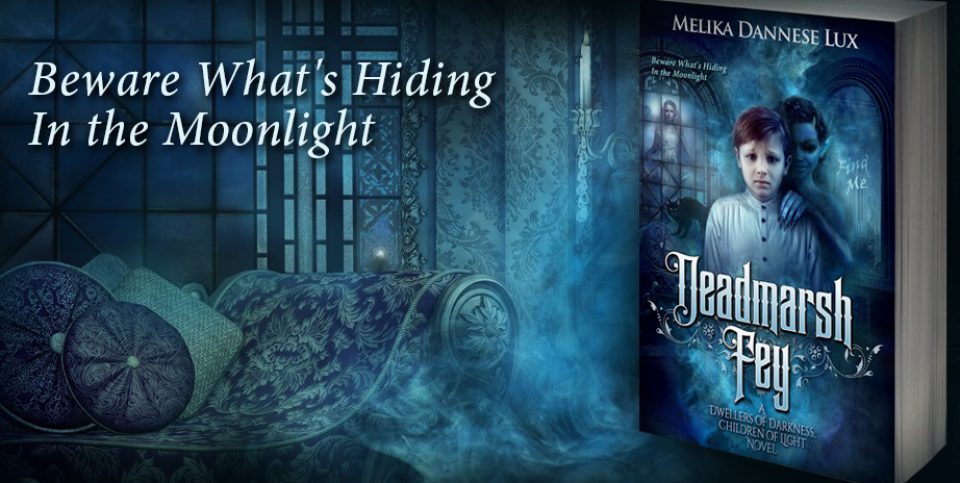
Buy Deadmarsh Fey from Amazon.com (Click Image)

Buy Corcitura from Amazon.com (click image)

Buy City of Lights from Amazon.com (click image)

Like what you’ve read so far? Then make sure to click below, so that you can get the latest news, updates, and fun delivered straight to your inbox!

Join 23 other subscribers

Recent Posts

  • Meet the Author
  • Deadmarsh Fey Critical Praise: 5 Star Review from Tome Tender
  • About the Author
  • A Very Personal Interview + Book Giveaway
  • 10 Quotes From Deadmarsh Fey

Archives

  • June 2019
  • February 2019
  • November 2018
  • October 2018
  • August 2018
  • July 2018
  • June 2018
  • May 2018
  • April 2018
  • January 2018
  • November 2017
  • August 2017
  • May 2017
  • March 2017
  • August 2016
  • December 2013
  • November 2013
  • October 2013
  • August 2013
  • July 2013
  • June 2013
  • May 2013
  • April 2013
  • March 2013
  • February 2013
  • January 2013
  • December 2012
  • November 2012
  • October 2012
  • August 2012
  • April 2012

Categories

  • Articles
  • Author Spotlight
  • Book Spotlight
  • Corcitura Feature
  • Deadmarsh Fey
  • Excerpts
  • Fun Stuff
  • Giveaway Announcement
  • Missives
  • News
  • Updates
February 2026
M T W T F S S
 1
2345678
9101112131415
16171819202122
232425262728  
« Jun    

© Melika Dannese Lux and Books In My Belfry®, LLC, 2011-2018. Unauthorized use and/or reproduction of this blog’s content without the author’s permission is strictly prohibited.

Blog Stats

  • 11,704 hits
Map

Blog at WordPress.com.

Privacy & Cookies: This site uses cookies. By continuing to use this website, you agree to their use.
To find out more, including how to control cookies, see here: Cookie Policy
  • Subscribe Subscribed
    • Books In My Belfry
    • Already have a WordPress.com account? Log in now.
    • Books In My Belfry
    • Subscribe Subscribed
    • Sign up
    • Log in
    • Report this content
    • View site in Reader
    • Manage subscriptions
    • Collapse this bar
 

Loading Comments...
 

    %d